Free worldwide shipping · Any two tees, $10 off with code PAIR · 15% off your first order with code WELCOME15 · Printed to order, ships in 2 to 5 days · Free worldwide shipping · Any two tees, $10 off with code PAIR · 15% off your first order with code WELCOME15 · Printed to order, ships in 2 to 5 days · Free worldwide shipping · Any two tees, $10 off with code PAIR · 15% off your first order with code WELCOME15 · Printed to order, ships in 2 to 5 days ·

ANTALYA · 36.8969° N, 30.7133° E
Antalya
Most people meet Antalya as a beach. It has been a great deal more than that for over two thousand years.
01 · The province
A province, not a resort
When people say Antalya, they usually mean the city. Often they mean only the hotel they stayed in.
Antalya is a province, and it runs along much of Türkiye’s Mediterranean coast, from Kaş in the west to Gazipaşa in the east.
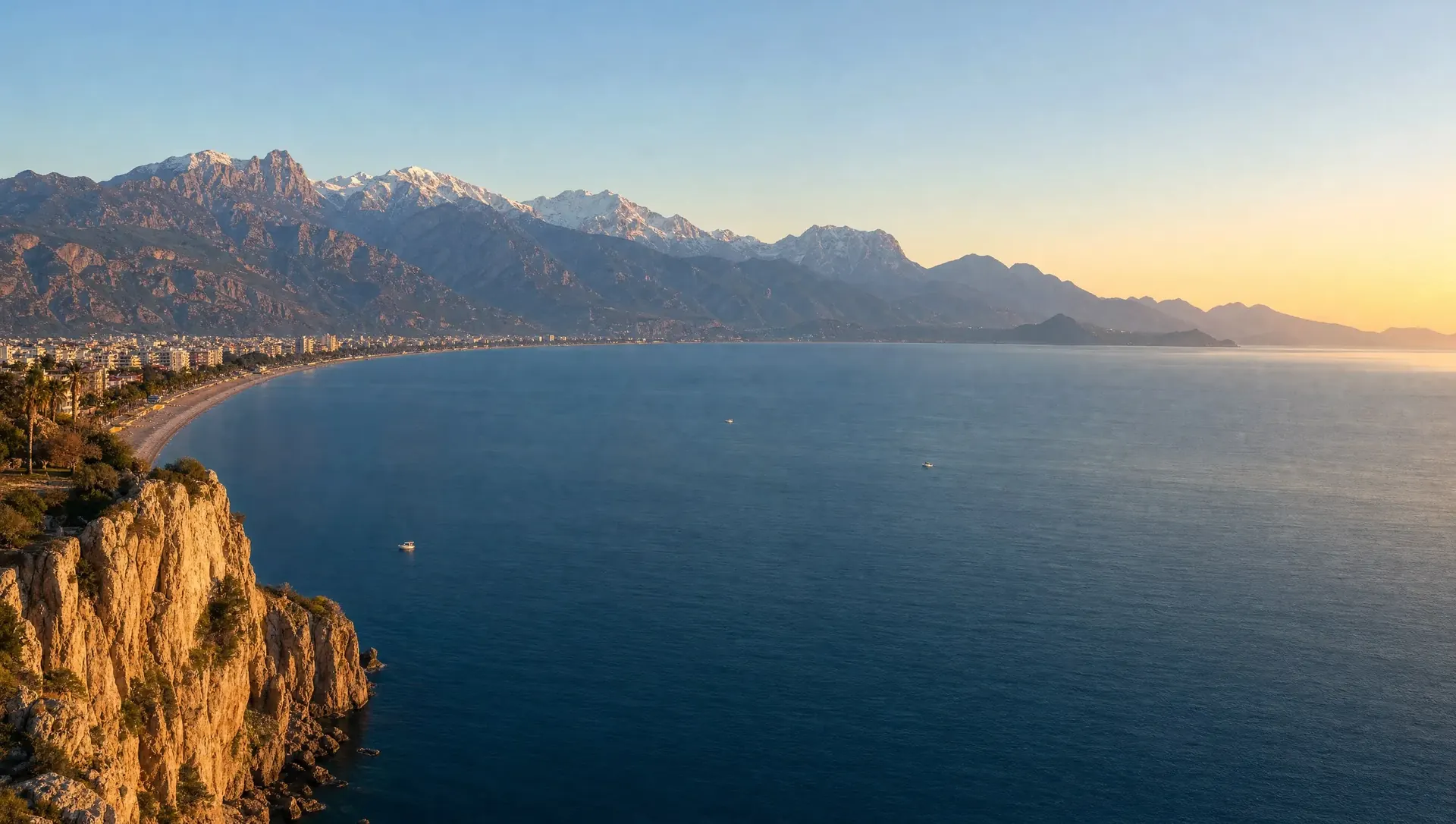
Behind it, the whole way, stand the Taurus Mountains. West of the city they come straight down to the water, which is why that coast is all coves, cliffs and islands. East of the city they step back, and the shore opens into long sand.
The city itself sits on a shelf of travertine cliffs above the sea. The rivers that come down from the mountains do not always bother with a beach. At Lower Düden, a river simply runs off the edge of the cliff and falls into the Mediterranean.
At Alanya, in the east, the Seljuk sultan Alaeddin Keykubad built the Red Tower in 1226 to guard his shipyard. Both still stand at the water’s edge.
KaşKalkanDemreFinikeKumlucaKemerAntalyaBelekSideManavgatAlanyaGazipaşa

02 · The city
Founded by a king, visited by an emperor, shaped by the Seljuks
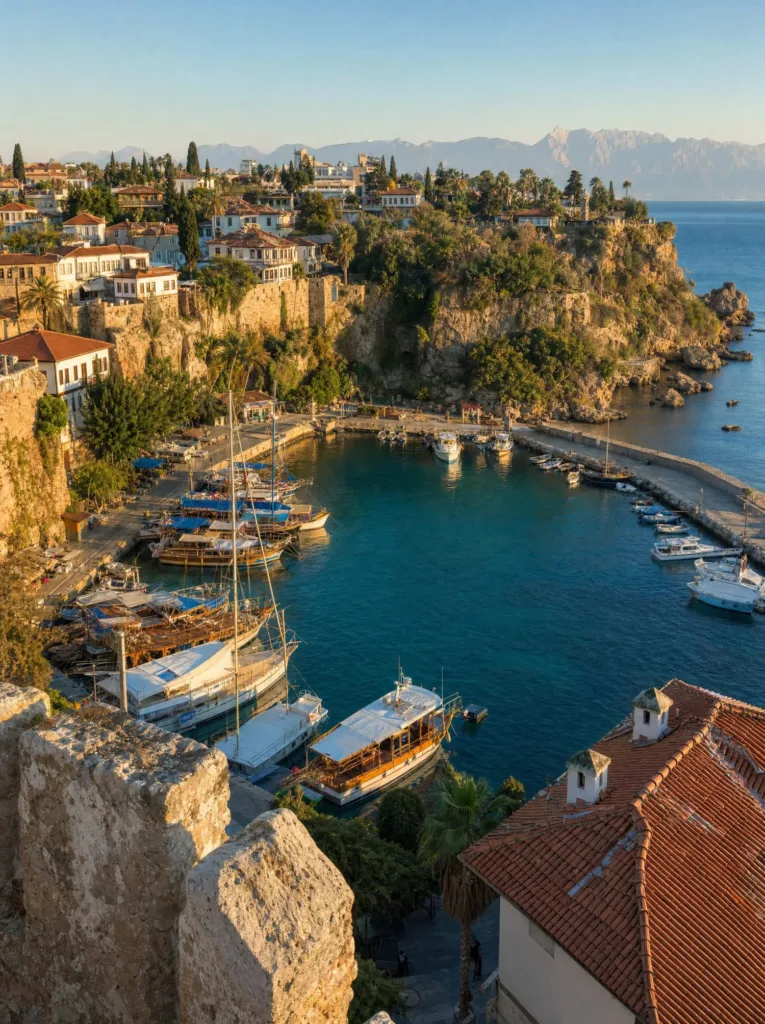
Around 150 BC, Attalos II, king of Pergamon, built a city around a harbor on this coast and named it after himself: Attaleia. The story still told in the city is that he sent his men out to find heaven on earth, and this is where they stopped.
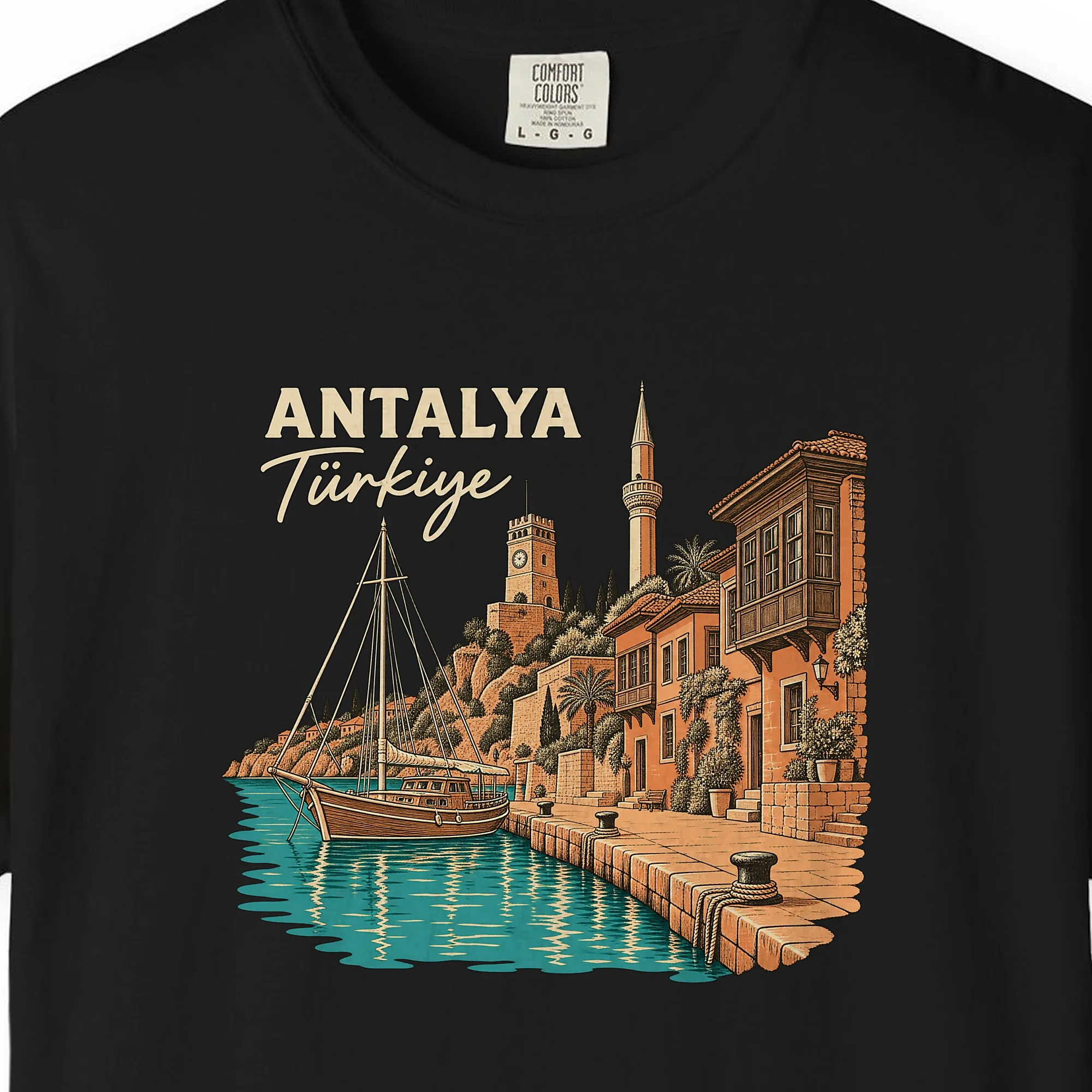
Old European maps turned the name into Adalia. Turkish turned it into Antalya. The harbor Attalos wanted is still there at the foot of the old town, and it is still at work. Travelers have sailed from it for two thousand years, the apostle Paul among them.
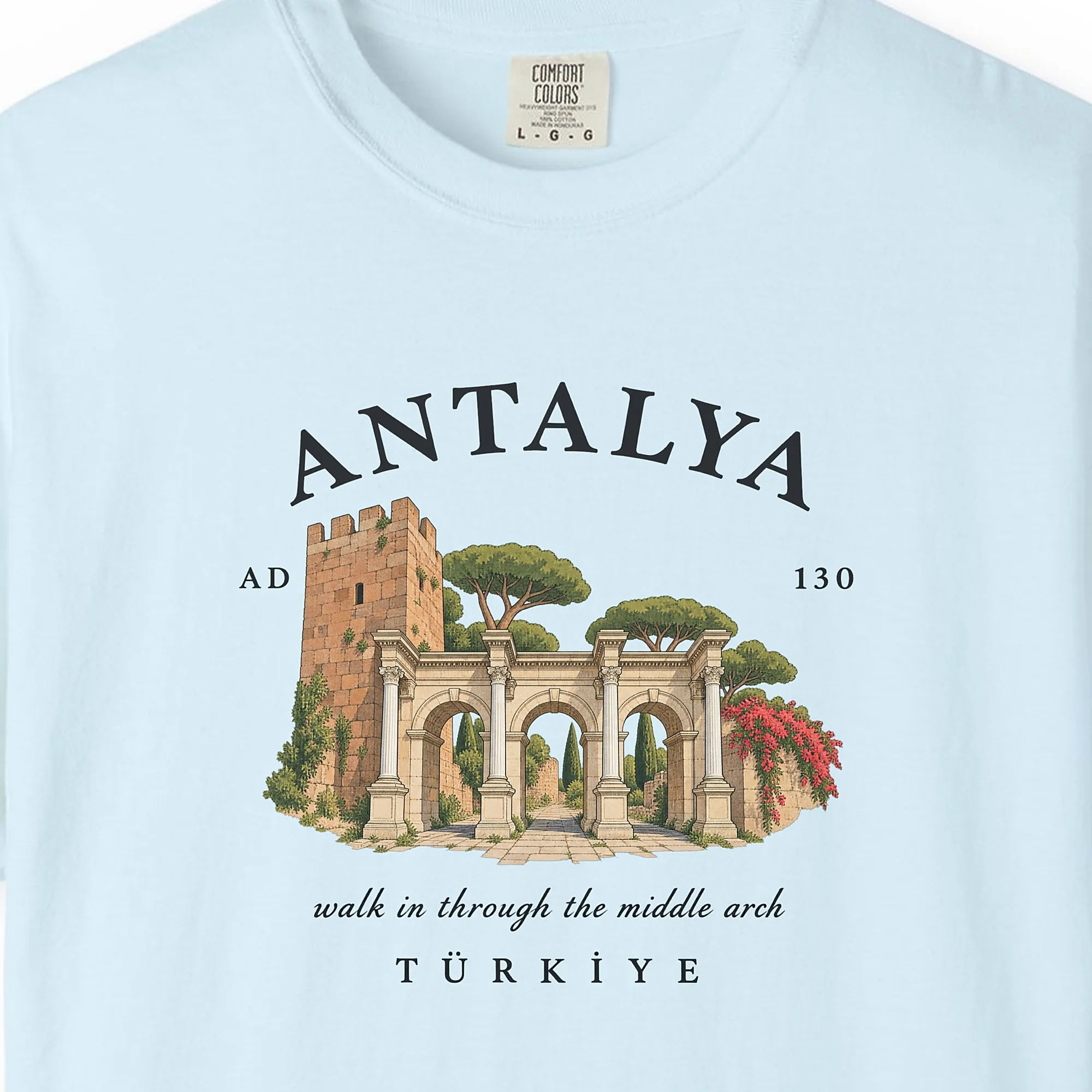
In AD 130 the emperor Hadrian came. The city built a triple-arched marble gate for the visit, and you can still walk through it.
In 2026 the world came again, for COP31.
The Seljuks took the city in 1207 and gave it much of the character it still has. The fluted Yivli Minaret, finished in 1230, is the symbol on half the city’s signs, and the Karatay Madrasa of 1250 still stands in Kaleiçi behind its carved stone portal. Nearby, the Broken Minaret stands over a building that has been a Roman temple, a Byzantine church and a mosque in turn.
The Ottomans first took the city in 1391 and held it for good from 1423. They gave it the Murat Pasha Mosque in 1570, whose windows carry the earliest tile panels of any Ottoman mosque in Antalya, and early in the seventeenth century the Tekeli Mehmet Pasha Mosque in the heart of the old town.
The walled quarter they all stand in is Kaleiçi. The name means, simply, inside the castle.
The harbor Attalos wanted is still at work below the old town.
Antalya

The old harbor, still at work
Kaleiçi · The old town
03 · The ancient cities
A coast of cities older than the empires that ruled them
The Greeks called the plain around the city Pamphylia, the land of all tribes. Drive east or north and the ancient cities come one after another, most of them within an hour.
At Perge, in the second century, a woman named Plancia Magna paid for the city’s great gate and had her name carved on it.
Also at Perge, in 1980, archaeologists found the lower half of a marble statue, the Weary Herakles. The upper half, it emerged, had left the country and ended up in a museum in Boston. In 2011 the two halves were reunited, and Herakles now stands whole in the Antalya Museum.
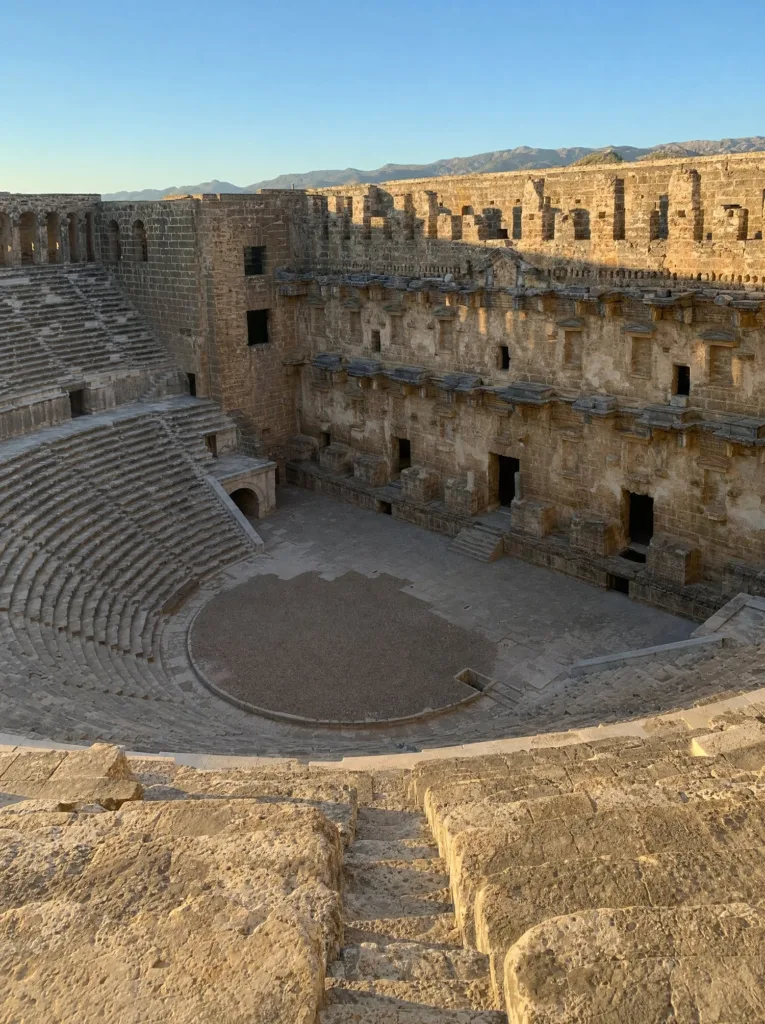
At Aspendos, the theater built between AD 161 and 180 is one of the best preserved in the Roman world. It has never really stopped being a theater: opera and ballet are still performed there on summer nights.
Side’s name meant pomegranate in an old language of Anatolia, and the fruit is stamped on its ancient coins.
High in the mountains, Termessos was besieged by Alexander the Great in 333 BC. He looked at it, gave up, and marched on.
And older than all of them: in Karain Cave, a short drive from the city center, people were living in the Old Stone Age.
PergeAspendosSideTermessosPhaselisOlymposKarain



Even Alexander skipped this climb
Termessos, 1,000 m up

04 · Lycia
The western coast, where tombs are cut into the cliffs
West of the mountains the province becomes Lycia, an older and stranger country.
The Lycians cut their tombs into cliff faces in the shape of temple fronts. They left stone sarcophagi standing in fields, on beaches, and at the top of a shopping street in Kaş, where people still walk around one on the way to dinner.
Their cities formed the Lycian League, which gave its larger cities more votes than its smaller ones. Nearly two thousand years later, Montesquieu held it up as the model of a good federal republic, and the Federalist Papers quoted him while the American Constitution was being argued over.
The League’s assembly hall still stands at Patara, beside one of the longest sand beaches in Türkiye, where loggerhead turtles come ashore every summer to nest.
Demre, ancient Myra, keeps its own rock tombs in the cliff above the town. Saint Nicholas served there as bishop in the fourth century.
At Kekova, the streets of a Lycian town slid under the sea after earthquakes, and you can look down at them from a boat. The Lycian Way, Türkiye’s first long-distance walking trail, runs for more than 500 kilometers along this coast.
KaşKalkanPataraDemreKekovaOlymposÇıralı

The neighbors have been quiet for two thousand years
Myra rock tombs, Demre
05 · Mountain and sea
Snow on one side, the sea on the other
The Taurus is never out of sight here. From Konyaaltı beach you look straight across the bay at the Beydağları range, often with snow on it well into spring.
In early spring you can ski at Saklıkent in the morning and swim in the sea in the afternoon. It is about an hour between the two.
Above Kemer, a cable car lifts you from the pine forest above Tekirova, 726 meters up, to the summit of Tahtalı, 2,365 meters up, in a single ride.
Near Olympos, at Yanartaş, flames burn straight out of the rock, fed by gas seeping from the ground. They have been burning for thousands of years. The ancients took them for the breath of the Chimaera, the monster the hero Bellerophon killed.
Inland, the Köprülü River cuts a canyon through the mountains, under a Roman bridge that is still in use.

Ski in the morning. Swim in the afternoon. Same day, same province.
Antalya

The Taurus, seen from the sea
Beydağları · Konyaaltı

06 · The table
What grows here, and what it becomes
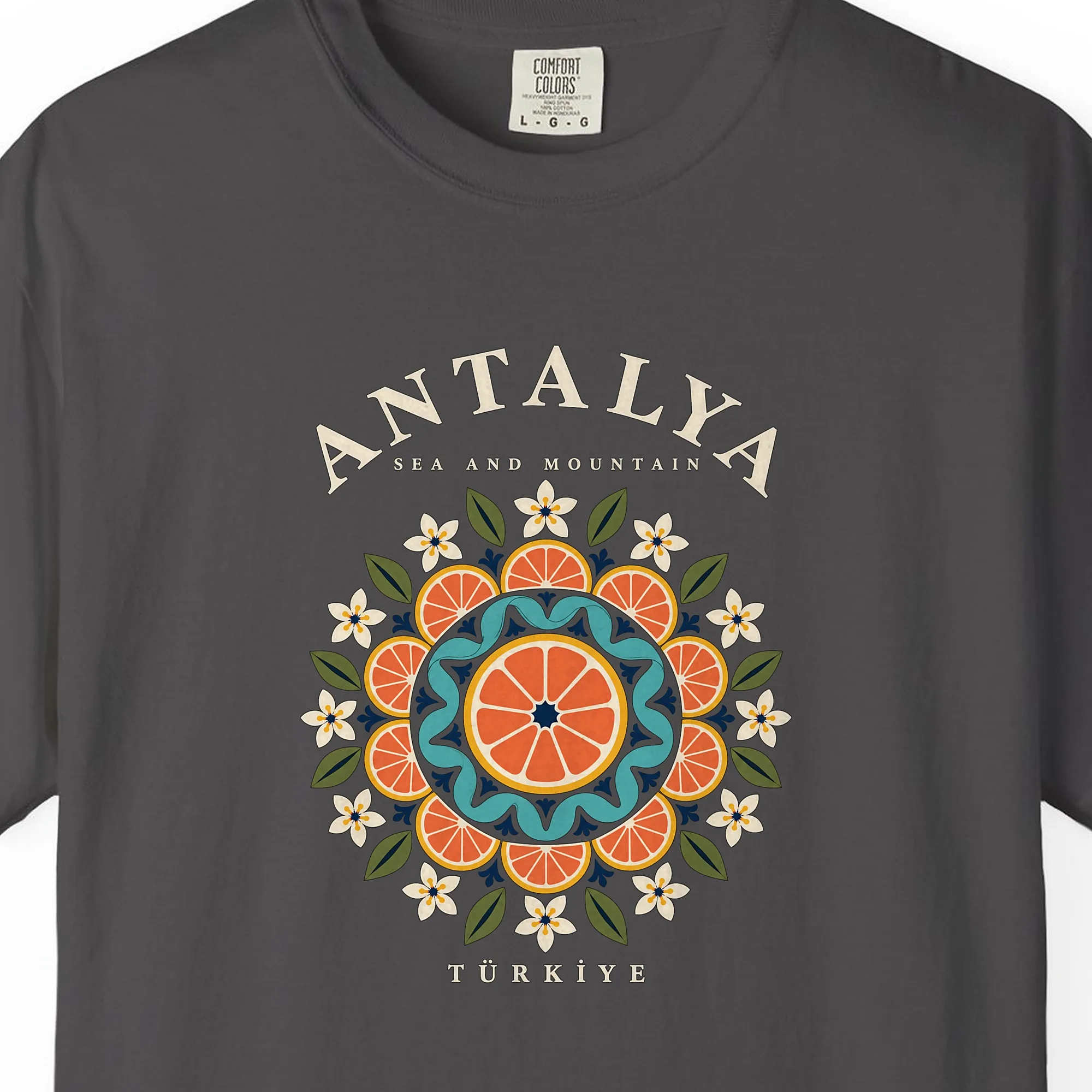
The orange is the city’s fruit. The film festival held here since 1964, the oldest in Türkiye, gives its winners a Golden Orange.
Finike oranges are known across the country. The orchards are picked in winter, when the rest of Europe is eating them.
Behind the coast, the plain is glass. Antalya is Türkiye’s greenhouse garden, and a great deal of the country’s winter tomatoes and peppers ripen here. Further east, around Alanya and Gazipaşa, bananas grow.
The local table has its own habits. Antalya’s piyaz is a white bean salad dressed with tahini, which surprises anyone who has eaten piyaz elsewhere in Türkiye. It comes beside şiş köfte, and it is not optional.

Above the clouds by breakfast
Tahtalı, 2,365 m
Antalya · In numbers and names
Twelve things even regulars don’t know
333 BC
Alexander the Great besieged Termessos, then gave up.
ATTALEIA
Founded around 150 BC and named after a king: Attalos II of Pergamon.
LYCIA
Its league of cities was quoted in the Federalist Papers.
1207
The Seljuks took the city. The fluted Yivli Minaret followed in 1230.
1226
The Seljuk Red Tower of Alanya was built to guard the sultan’s shipyard.
1391
The Ottomans first took Antalya. It became Ottoman for good in 1423.
1570
The Murat Pasha Mosque was built, with the city’s earliest Ottoman tile panels.
ADALIA
Attaleia became Adalia on European maps, and Antalya in Turkish.
1921
Italian troops, landed in 1919, left the city in June 1921.
2011
The Weary Herakles, split between Antalya and Boston, made whole again.
07
Antalya’s license plate code. You will see it on everything.
AYT
The airport code, and the first word most visitors learn.
Noel Baba · Demre
I am from Antalya
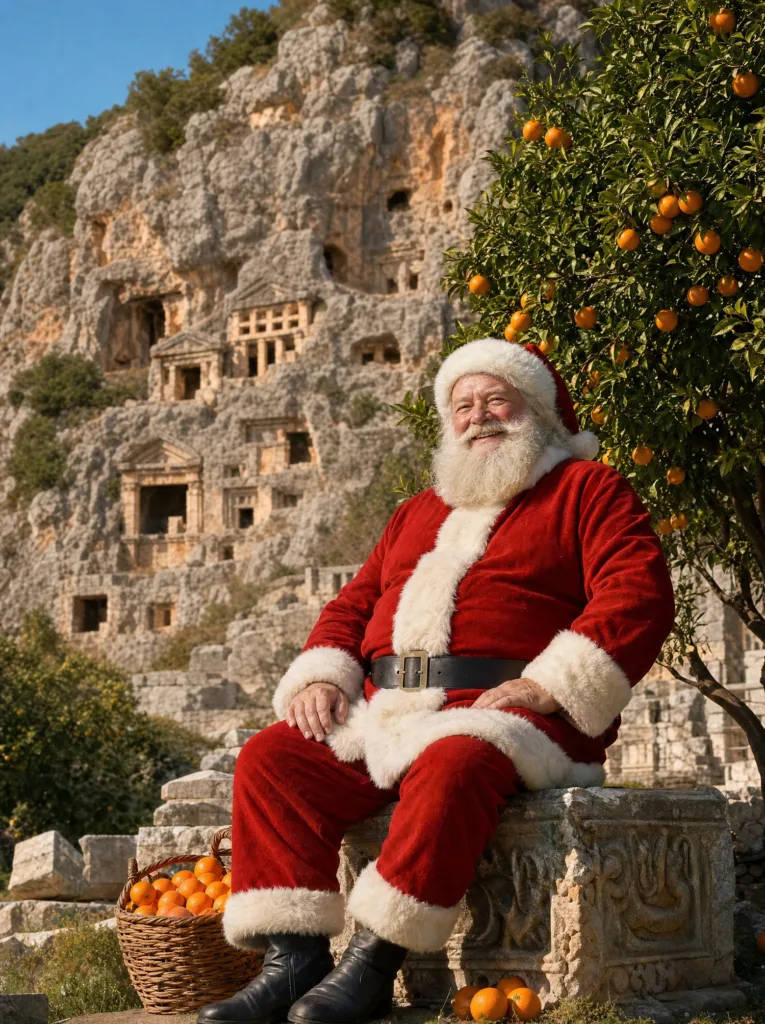
Ask a child where Santa Claus comes from and they will point to the North Pole. The true answer is a good deal warmer: the Lycian coast of Antalya.
Nicholas was born around AD 270 in Patara, an ancient port on the Antalya coast near Kaş. He became bishop of Myra, the town that is Demre today, a little over two hours’ drive west of Antalya city. Both places are in Antalya, and he never left this coast. He was known for one habit above all: he gave, and he made sure nobody saw him do it.
The story told most often is of a poor man in Myra, today’s Demre in Antalya, with three daughters and no dowry for any of them. On three nights, a bag of gold came through his window. One of them, the story goes, landed in a stocking left by the fire to dry, and that is why stockings still hang by fireplaces in December.
He died on 6 December, traditionally in AD 343, and was laid to rest in Myra, on the Antalya coast. The church built over his tomb in the sixth century still stands in Demre, in Antalya. Officially it is the Saint Nicholas Memorial Museum; everyone here calls it the Noel Baba Kilisesi, the Santa Claus Church. In 1087 Italian sailors carried his bones off to Bari, but Demre is still where people come to find him.
Over the centuries his name traveled. The Dutch called him Sinterklaas, America turned that into Santa Claus, and at home in Türkiye he is Noel Baba, Father Christmas. Every year on 6 December, visitors from around the world come to Demre, in Antalya, to remember him.
So when someone asks where Santa Claus is from, you can tell them. He is from Antalya.
PataraMyraDemre6 DecemberNoel Baba

Eighteen kilometers of sand and nobody on it
Patara, Lycian coast, Antalya
07 · Why it is all on a shirt
Everything on this page is somewhere in the store
We started this store because we fell in love with this province. And because we kept meeting people who had come here for years and knew only a small corner of it.
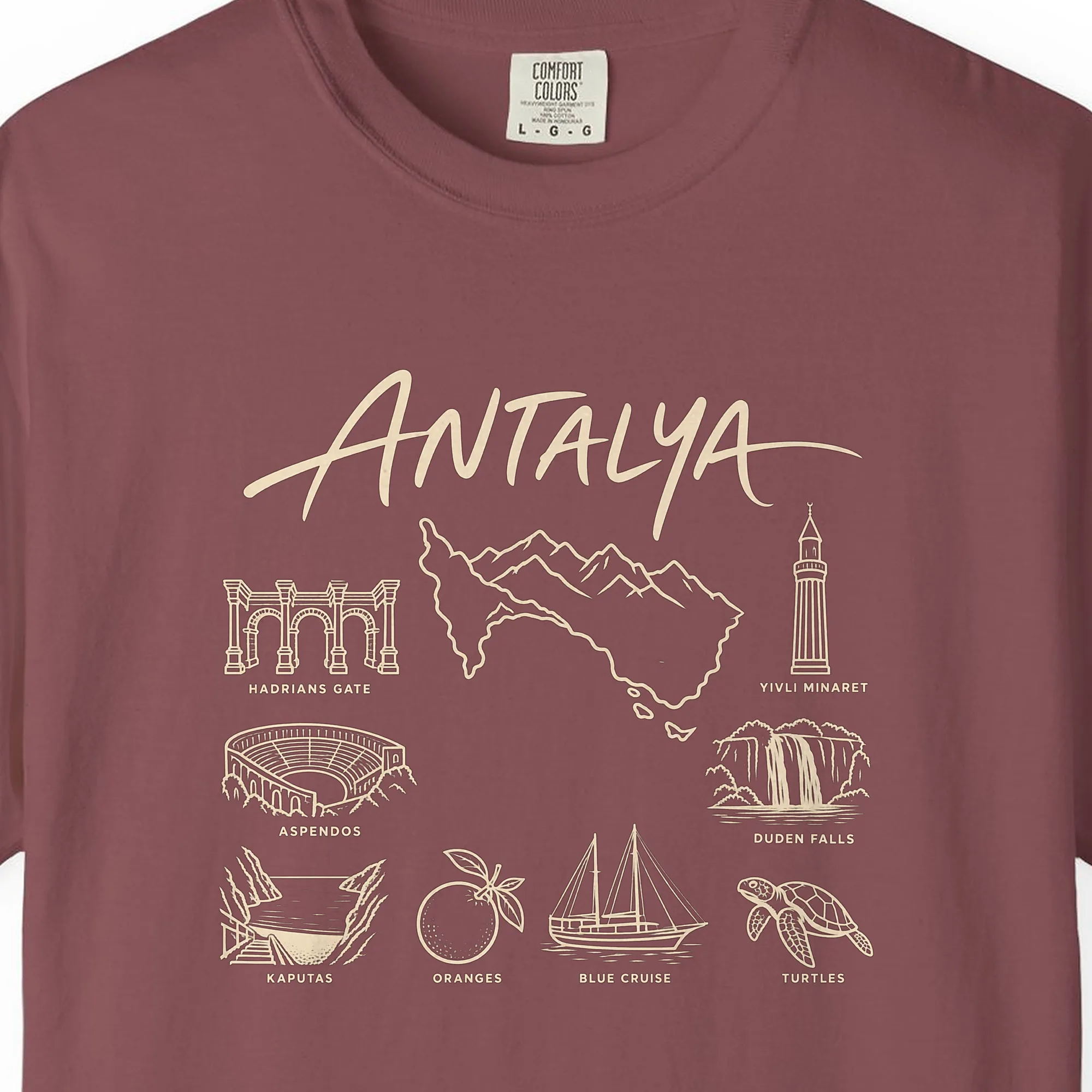
So the range is built the way this page is. The harbor, the gate, the minaret, the theater, the tombs, the turtles, the orange, the mountain. Each one drawn by designers who live here.
Every date printed on our designs is the true date of the thing it sits under: 150 BC under Antalya’s own name, AD 130 under Hadrian’s Gate, 1230 under the Yivli Minaret. And every design carries the name of the place it is about, so that whoever asks about your shirt learns something true.
If you have been here, it is a way of staying a little longer. If you have not been yet, it is a good place to start.




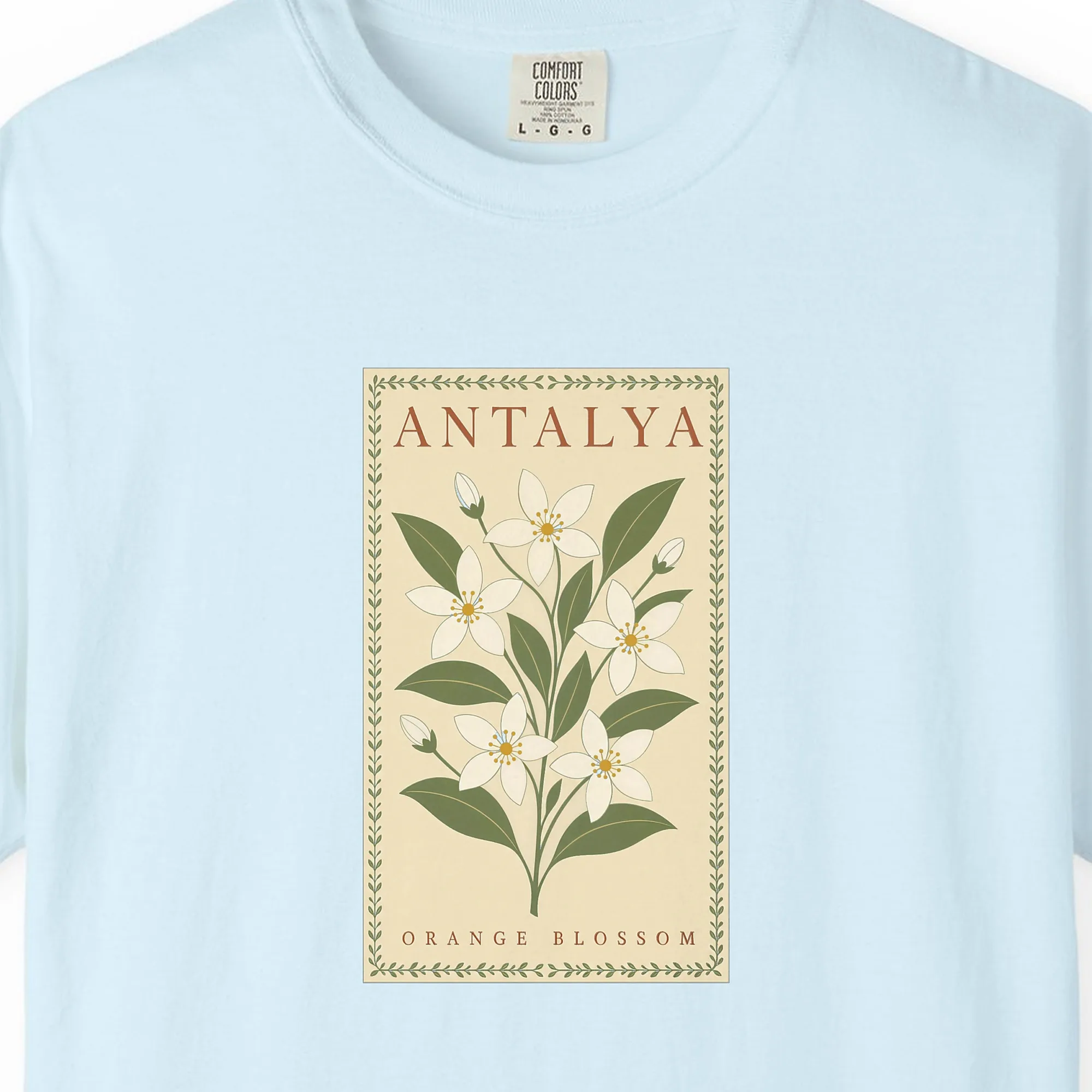
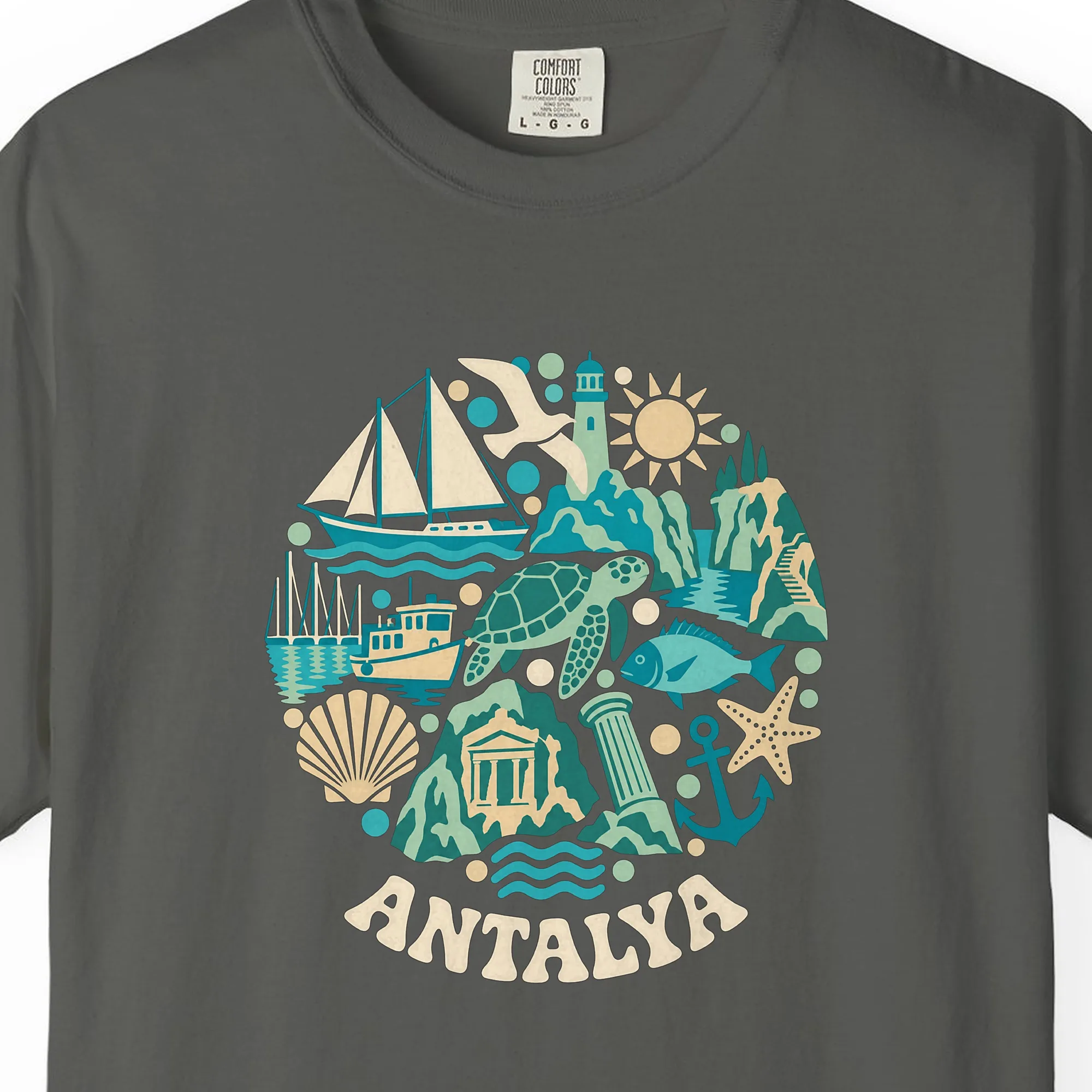

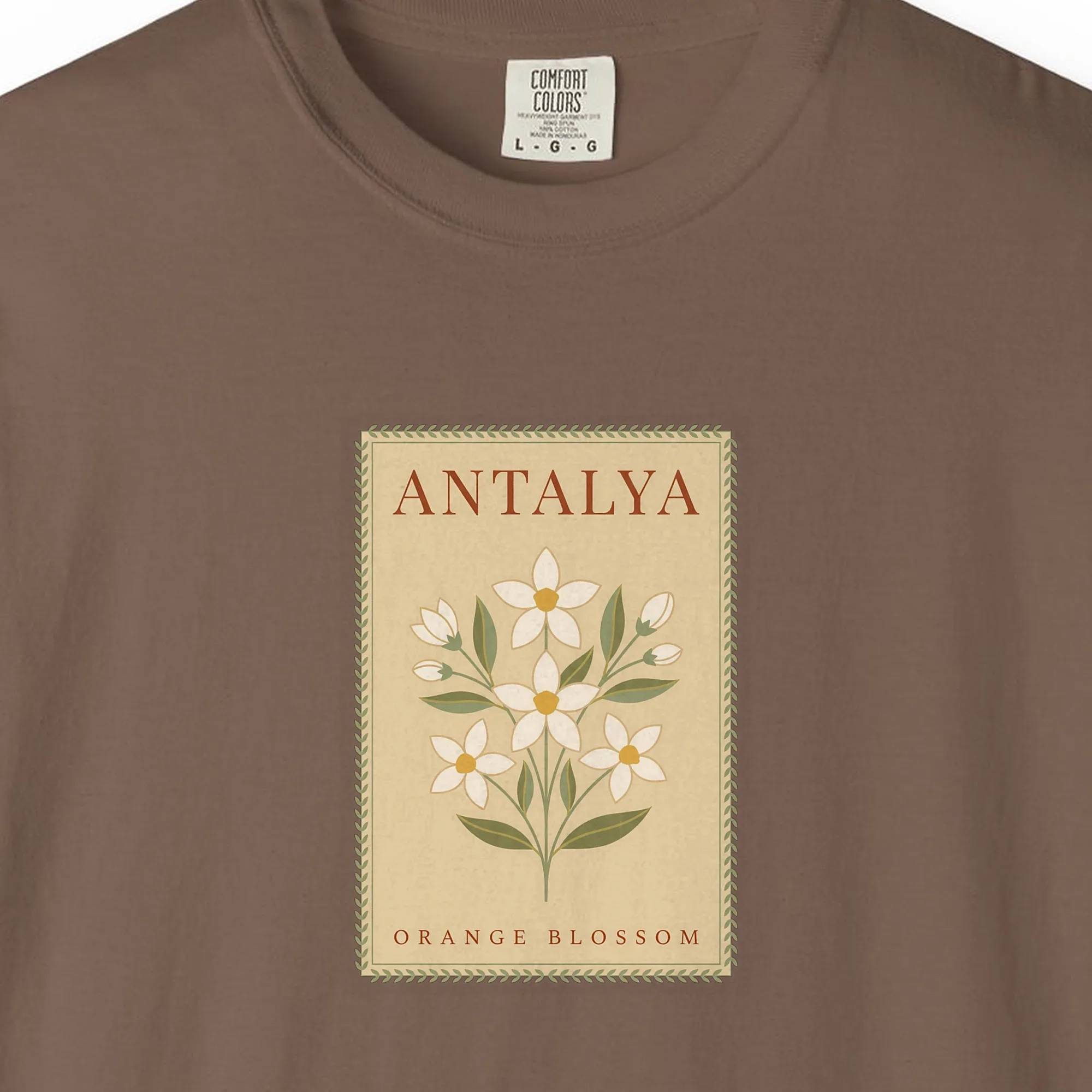

Antalya · Worn on the coast
The places on this page, and the people who wear them


ANTALYA.GIFT
Take Antalya With You.
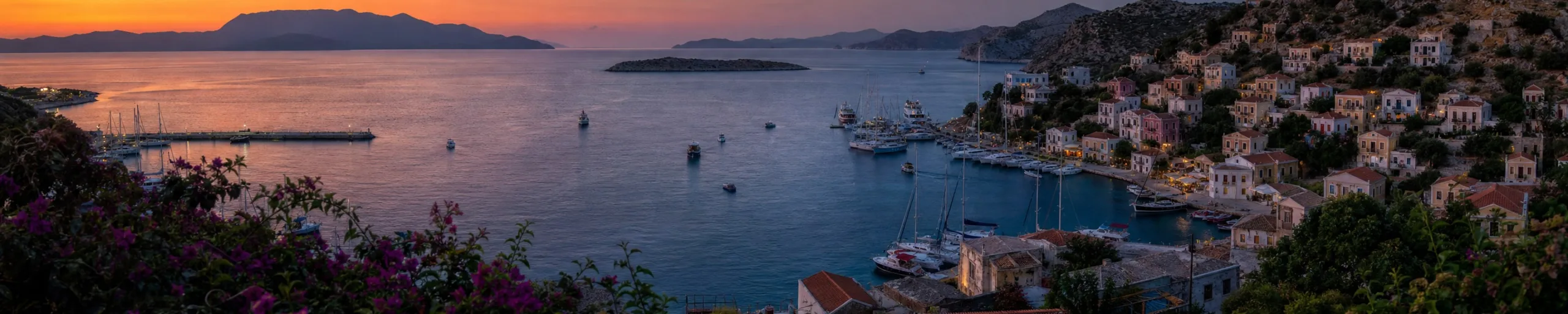
Stay with Antalya. A little longer
Antalya · 07 · AYT